COMPUTEX 2026 Pre-Show Forum Highlights the Era of “AI Systems” Integration Across Industries
Publish Date :2026/05/29
COMPUTEX TAIPEI, Asia’s leading B2B technology exhibition, will take place
from June 2 to 5 at the Taipei Nangang Exhibition Center Halls 1 and 2, the
Taipei World Trade Center Hall 1, and the Taipei International Convention Center
(TICC). On May 27, the Taipei Computer Association (TCA), co-organizer of
COMPUTEX, hosted the COMPUTEX 2026 Pre-Show Forum. Under the theme "The AI Era:
A Collective Effort Toward AI Systems," the forum invited key global tech
leaders including Moe Abdula, APAC Vice President of Customer Engineering at
Google Cloud; Joe Chen, President and CEO of MediaTek; Ryan Fletcher, Partner at
McKinsey & Company; Wei-Bin Lee, CEO of the Hon Hai Research Institute; JM Hung,
Vice President of Business Center at E Ink; and Allen Lien, Chairman and CEO of
Acer Medical. These experts focused on key topics such as AI systems, enterprise
AI, AI security, AI chips, and vertical applications, setting the stage for this
year's COMPUTEX industry trends and discussions.
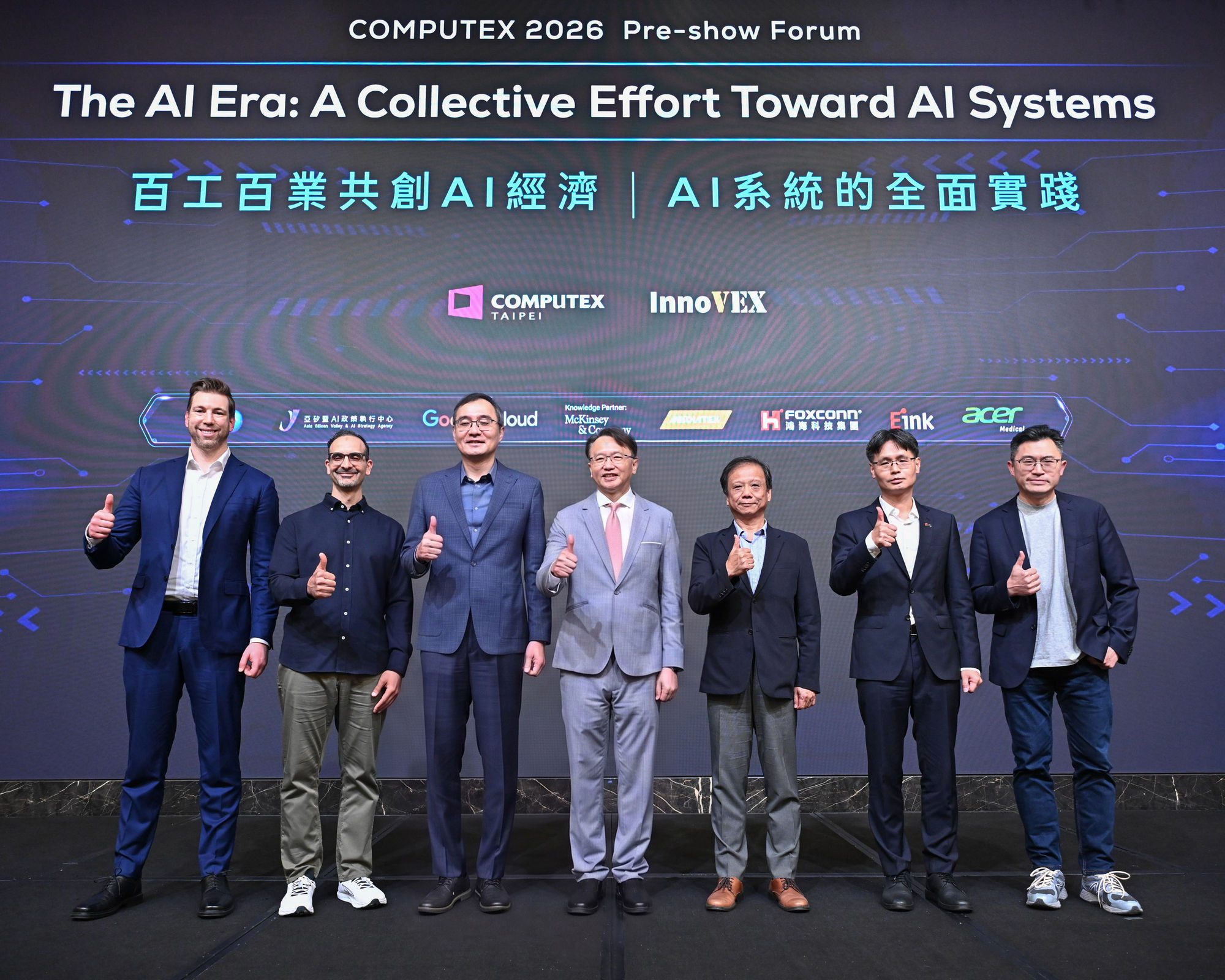
▲On May 27, the Taipei Computer Association
(TCA), co-organizer of COMPUTEX, hosted the COMPUTEX 2026 Pre-Show Forum.
Under the theme "The AI Era: A Collective Effort Toward AI Systems," the
forum invited key global tech leaders including Moe Abdula, APAC Vice
President of Customer Engineering at Google Cloud; Joe Chen, President and
CEO of MediaTek; Ryan Fletcher, Partner at McKinsey & Company; Wei-Bin Lee,
CEO of the Hon Hai Research Institute; JM Hung, Vice President of Business
Center at E Ink; and Allen Lien, Chairman and CEO of Acer Medical. These
experts focused on key topics such as AI systems, enterprise AI, AI
security, AI chips, and vertical applications, setting the stage for this
year's COMPUTEX industry trends and discussions.
Shifting from an Era of Computing Power Competition to an Era of System
Value
TCA Chairman Jason Chen stated in his opening remarks that AI – spanning AI PCs
and AI Agents to cloud services, edge computing, and vertical applications – has
become the critical for industrial scaling and restructuring, reshaping the
competitive landscape. COMPUTEX 2026’s theme "AI Together" signals that AI has
moved past models and compute to system integration, industrial deployment, and
cross-domain collaboration. Simply put, the competitive landscape is
transitioning from the era of computing power to the era of systemic value. This
year’s COMPUTEX Pre-Show Forum, held for the third consecutive year,
successfully highlighted industry trends by focusing on how AI systems aids
real-world implementation, transforming discrete innovations into a system-wide
collaborative effort.
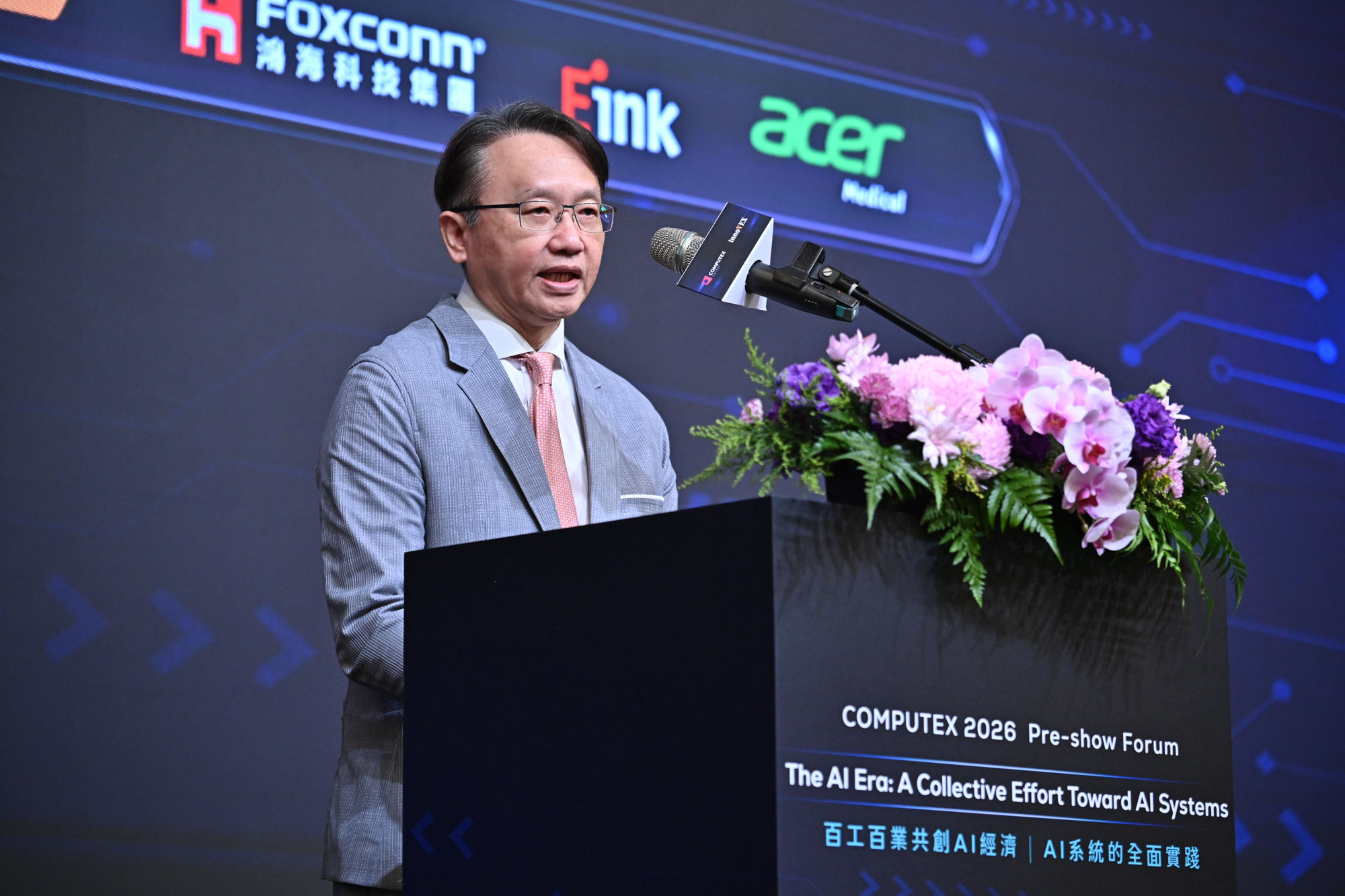
▲TCA Chairman Jason Chen
Beyond Exhibition Halls – MIT Drone Show Near TAIPEI 101 on June 2
This year, TCA is bringing the exhibition experience to the Taipei City skyline
to enhance global exposure. On the evening of June 2, a MIT drone show combining
technology, art, and the city skyline will take place around Taipei 101. The
show will be livestreamed, enabling people worldwide to witness Taiwan’s
technological and innovative capabilities. Following this, the InnoVEX Night
Party will be held at Taipei 101 on June 3, bringing together international
startups, investors, and industry partners to establish Taipei as a pivotal hub
for global innovation.
Moe Abdula: Implementing Agentic AI Architectures for Diverse Industries
Moe Abdula, APAC Vice President of Customer Engineering at Google Cloud,
delivered a keynote presentation titled "Agents in Action - Real Life examples
and Best Practices for Agentic Solutions." He pointed out that enterprise
adoption of AI Agents is already a reality. Research firm Gartner predicts that
by the end of 2026, approximately 40% of enterprises will deploy AI agents in
production environments. Furthermore, by 2028, Fortune 500 companies are
forecasted to manage an average of over 150,000 AI Agents – equivalent to
Google's total employee count. The efficient management of digital employees is
critical to the success of digital transformation for enterprises. According to
Moe, the success of an agentic system relies on three core pillars: “Context &
Memory” for personalized responses, the “Ability to Take Action” across systems,
and rigorous security management – “Secured to Share, Governed to Care” to
ensure every AI Agent has an independent, auditable identity.
Real-world implementations show substantial benefits. In the retail industry,
Singapore's FairPrice utilizes Vision AI Smart Carts to help customers with
in-store navigations and tailored product recommendations, boosting sales
through efficiency. In the financial industry, DBS Bank uses AI agents to
organize customer information, cutting wealth management preparation time by
70%. Indonesia’s Telkomsel utilizing voice models to handle basic customer
service, allowing personnel to delegate time on more complex customer
complaints.
In manufacturing, companies like Hon Hai Technology Group (Foxconn), and Bosch
use AI for employee knowledge sharing, real-time Six Sigma analysis, robotics
training, and workplace safety alerts (reducing workplace accidents). Moe
emphasized that the ultimate goal is empower workers without IT backgrounds,
thereby enabling all workers within an enterprise to benefit from a secure and
optimized AI ecosystem in this new era of enterprise AI.
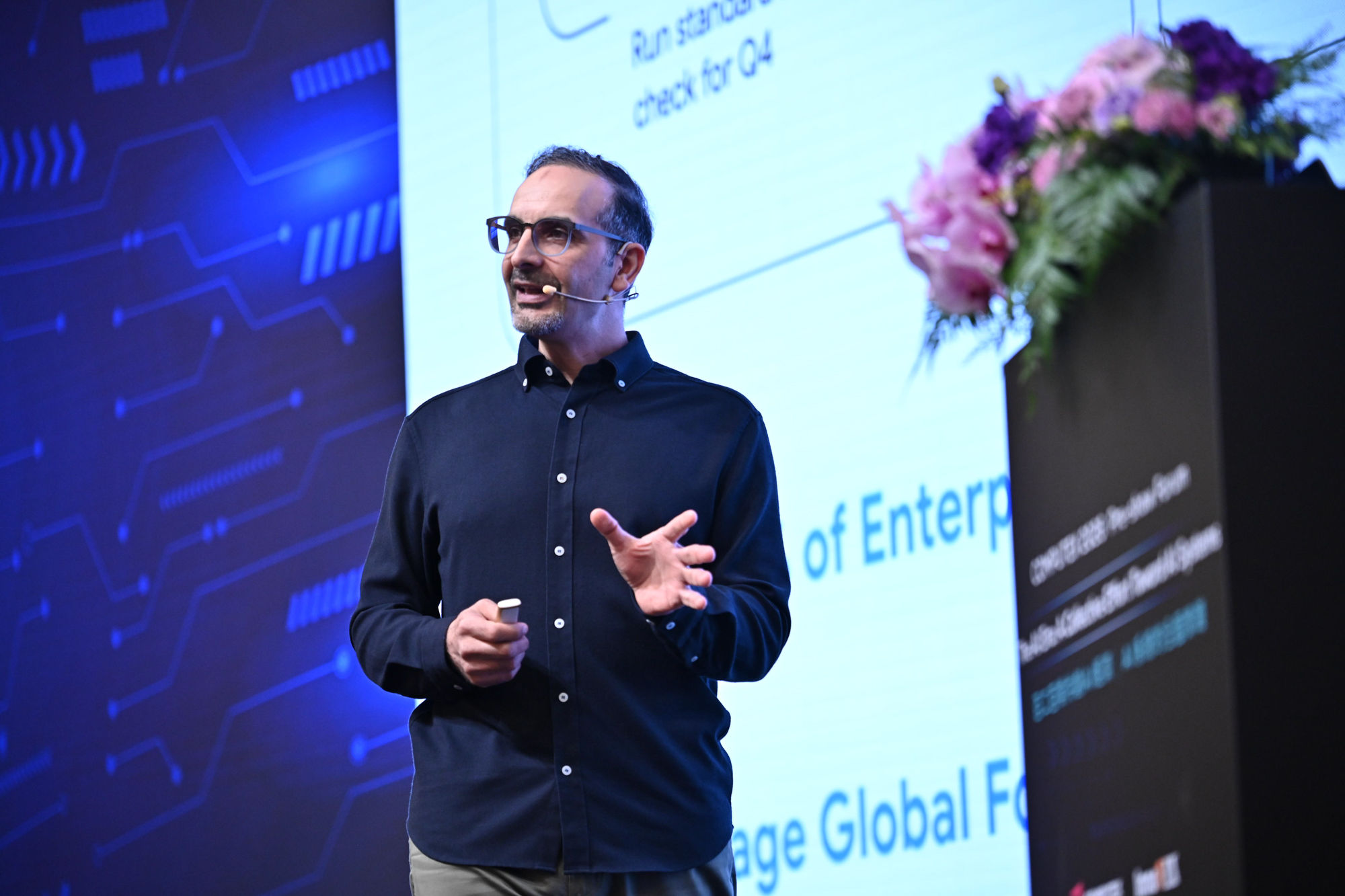
▲Moe Abdula Moe Abdula, APAC Vice President of Customer Engineering at
Google Cloud
Joe Chen: The Era of Agentic AI and Hybrid Cloud
Joe Chen, President and COO of MediaTek, presented "AI Everywhere | Era of
Agentic AI from Edge to Cloud." He noted that with AI data center capital
expenditures soaring to an astronomical $700 billion USD. This rapid evolution
of AI is redefining consumer product formats and user experiences, marking a
shift away from Generative AI to Agentic AI. As agent-equipped devices become
ubiquitous, AI will shift from being passive responders to proactive, real-time,
and highly customized services.
The widespread implementation of agents will result in the proliferation of
“Agentic AI Devices” – for example, an ordinary smartphone will become an
“Agentic AI Smartphone.” MediaTek defines the Agentic AI UX through five core
traits: (1) Proactive and Timely: AI understands users' needs better than they
do and can proactively provide services before events occur; (2) Knows and
Understands You: AI, equipped with long-term and short-term memory capabilities,
will have a deep understanding of user needs, habits, and preferences; (3)
Interactive Collaboration: Enables cross-device communication and collaborative
operation between devices (Agent to Agent); (4) Learning and Evolution: The more
frequently it is used, the more accurate and intelligent the AI's service
capabilities become; (5) Exclusive Privacy and Protection: Ensure personal
information is securely protected in the cloud or on the device.
In response to the Agentic AI era, MediaTek is delivering diverse platforms
spanning the edge, system, applications, and AI infrastructure. At the edge
layer, MediaTek has developed the “Agentic OS” platform, equipped with proactive
awareness, dedicated to overcoming challenges in extreme computing power and
energy consumption simultaneously. At the application layer, the MediaTek
Dimensity Developer Center’s AI development tools lets developers access the
full potential of Agentic chip technology, thereby building a global Agentic
ecosystem. MediaTek is also developing advanced cloud AI technology to
accelerate the scaling of cloud computing in addition to improving the
performance per watt (Perf/Watt) and performance and total cost of ownership
(Perf/TCO) of server racks. Joe Chen believes the future will be a “hybrid
cloud” world where massive, trillion-parameter model training remains in
power-backed clouds. Meanwhile, billions of Agentic AI devices will serve as
consumer access points, creating business models with positive feedback loops
between the cloud and edge.
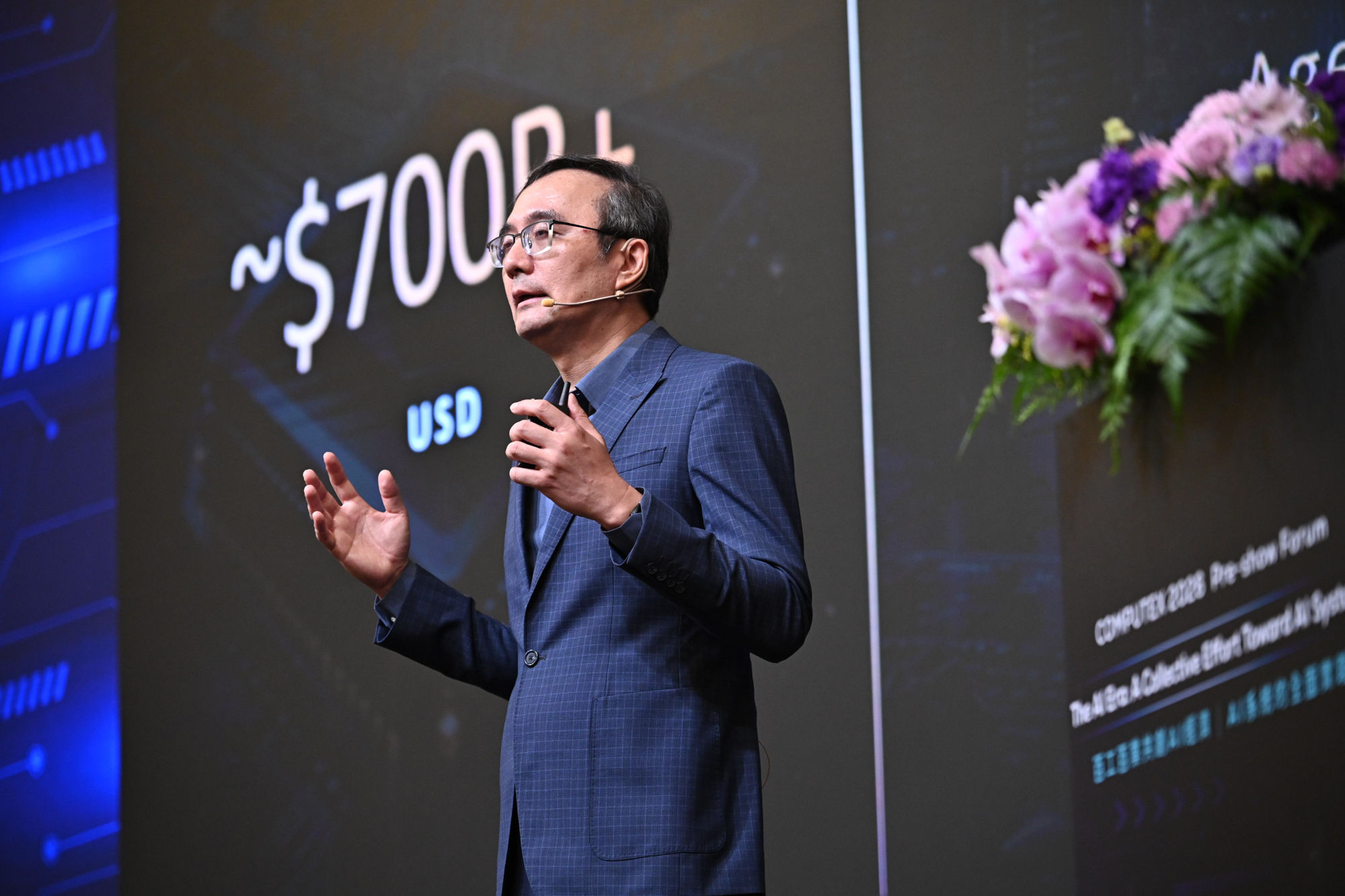
▲Joe Chen, President and COO of MediaTek
Ryan Fletcher: The Four Horsemen of AI Scale Determining Token Computing
Effectiveness and Reshaping Infrastructure
Ryan Fletcher, Partner at McKinsey & Company, delivered a keynote titled "Power,
Cooling, Networking, and Compute: The New Four Horsemen of AI Scale." He
emphasized that while AI is often perceived as an abstract concept made of
tokens and data, it possesses “real weight”. As AI moves from prototyping to
mass production, competition will shift from model iteration to a battleground
of foundational infrastructure systems. The four constraints of scaling AI are
Power, Cooling, Networking, and Compute, and failure in any one of these will
compromise the entire infrastructure. Firstly, power determines the pace at
which enterprises can scale AI. In North America, data center electricity demand
is projected to rise from 4% of total generation in 2025 to 14% by 2030, yet
planned power additions can only meet 40% of this demand. Secondly, cooling
presents another challenge, with data centers facing year-round, highly
concentrated heat dissipation. Though cooling technology has rapidly evolved
from air cooling and liquid cooling to direct-to-chip cooling, this accounts for
only 10% of the problem. The remaining 90% of the challenge lies in the
stability of industrial-scale maintenance and after-sales support.
Furthermore, while floating point operations per second (FLOPS) has skyrocketed
60,000 times over the past 20 years, network bandwidth has grown by only 30%. As
a consequence, GPUs face a “Network Wall” that leaves them idle waiting for data
(30-60% of the time for a 100k GPU datacenter). Lastly, Fletcher sees compute as
the starting point for architectural choices. The AI factories of the future
will be clearly divided into two markets: one is likened to a "Formula 1 racing"
factory, where peak performance and innovative solutions are prioritized over
cost; the other is likened to a “highly-standardized mass-production factory”,
where extreme cost reduction and high-efficiency horizontal expansion is
prioritized. Only by controlling how infrastructure is utilized can enterprises
truly unleash the commercial potential of AI within the constraints of the
physical world.
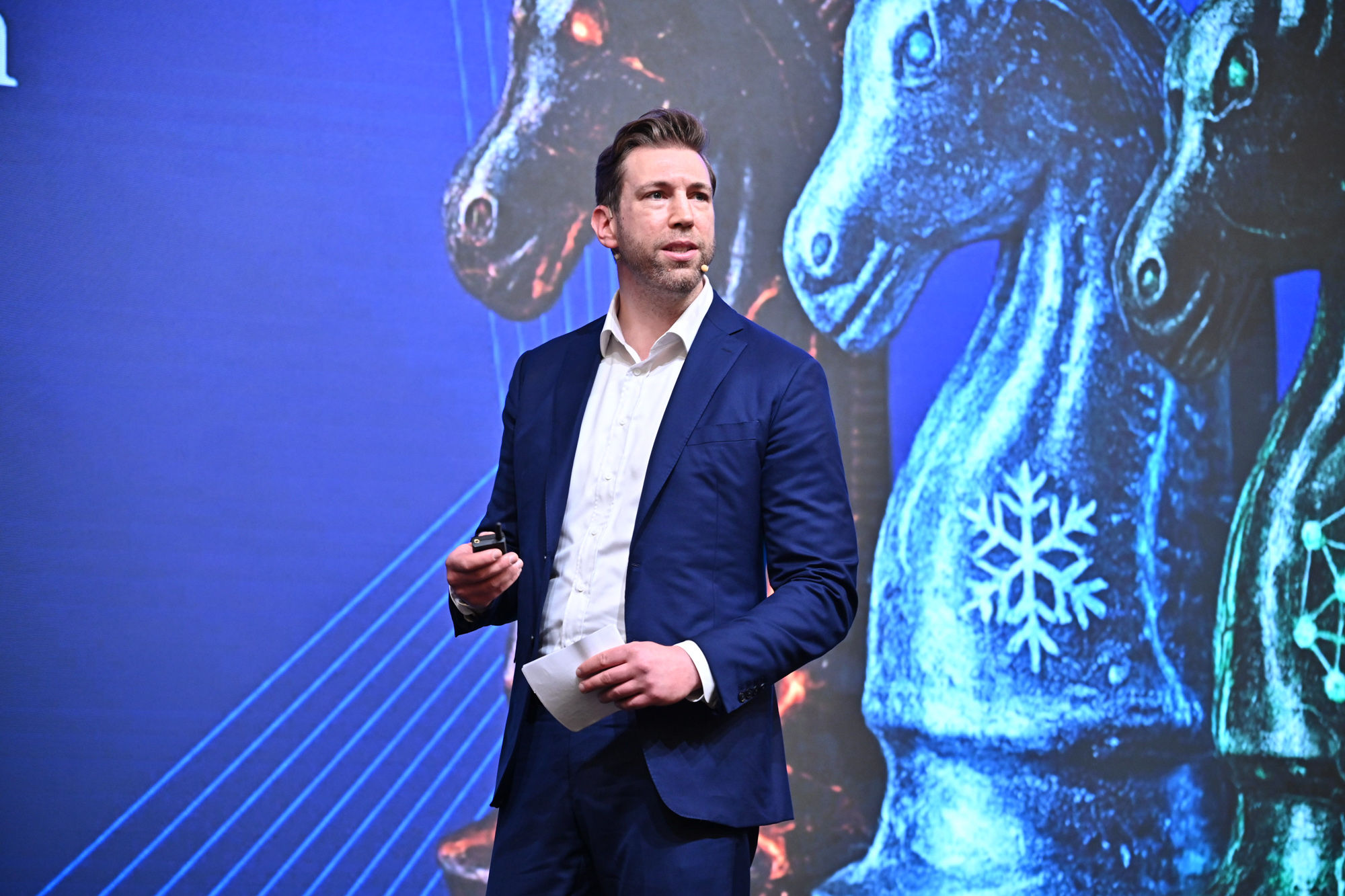
▲Ryan Fletcher, Partner at McKinsey &
Company
Wei-Bin Lee: Transforming Cybersecurity in the AI Era
Wei-Bin Lee, CEO of the Hon Hai Research Institute, gave a speech on "Enterprise
AI vs. AI Security," noting that while the wave of Agentic AI brings undeniable
productivity gains alongside entirely new security challenges. Cybersecurity
threats have shifted from traditional malicious code to natural language attacks
like prompt injection, allowing hackers to use malicious prompts to trick
internal AI systems to write malware, compromise mail servers, and breach
databases without traditional coding tools. Additionally, AI tools have
compressed the time hackers need to exploit system vulnerabilities from hundreds
of days to mere minutes or hours, making accelerated defense measures
imperative.
Wei-Bin Lee stressed that in the era of Generative AI, cybersecurity strategies
must be transformed because “traditional methods of building walls cannot defend
against threats that spread like airborne diseases.” He advised that enterprise
defense strategies must require vendors to clarify how their AI was trained,
where the data was sourced, what security measures are working in conjunction
with AI, how to maximize the interpretability of AI decisions and manage
potential risks. Furthermore, AI should be governed as if it were a "human,"
because AI is no longer constrained to predefined logic. Simply put, AI "knows"
the rules, but may not "do" them. Therefore, when AI's behavior is irreversible
and external, "Human in the loop" oversight must be ensured. It is important to
establish clear multi-tiered accountability spanning legal, operational, and
technical dimensions.
CEO Wei-Bin Lee emphasizes that Information Security Officers must become
bilingual, mastering both AI and cybersecurity languages, to transform risk
management into a protective moat that safeguards the enterprise without
blocking innovation.
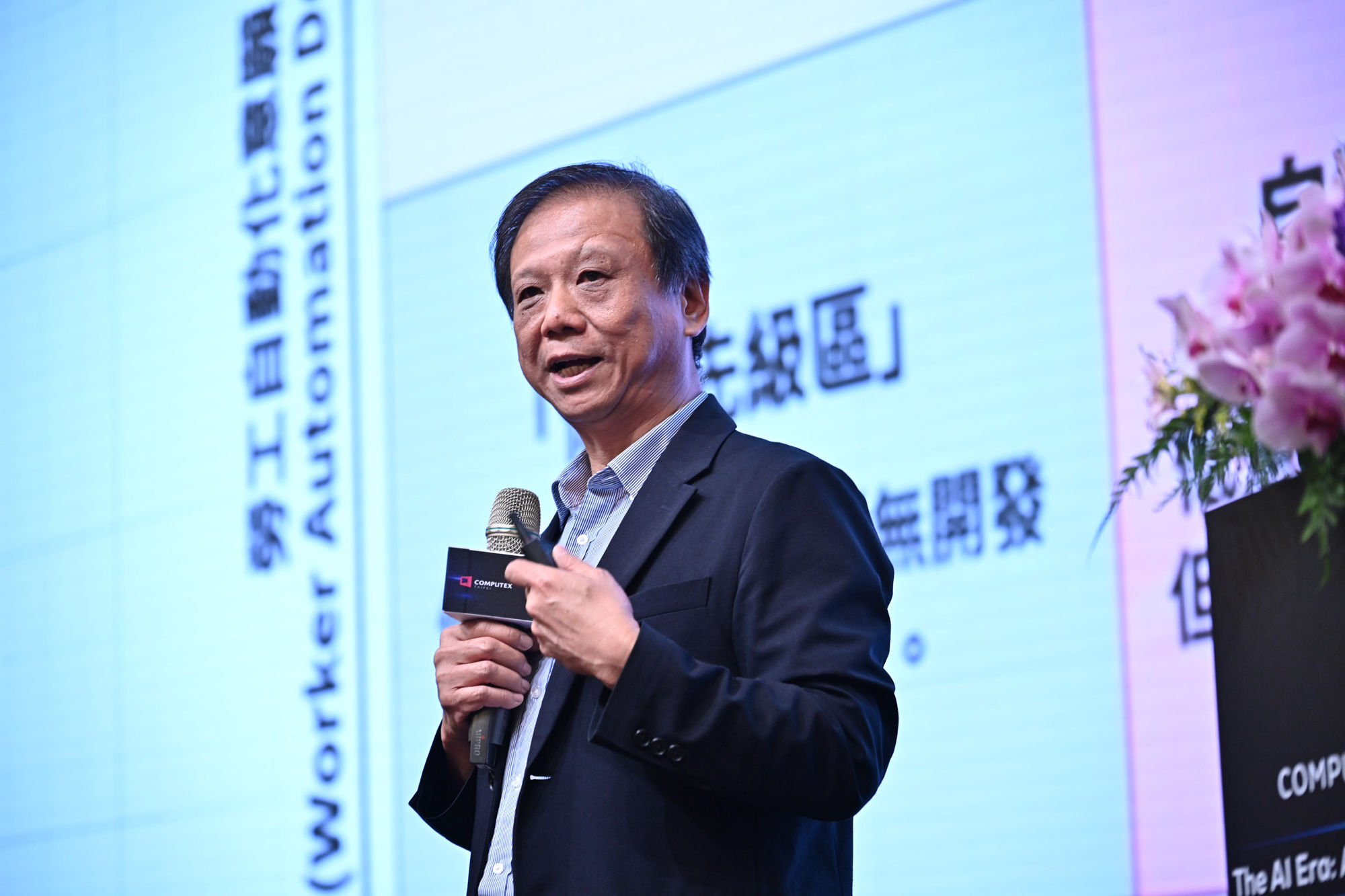
▲Wei-Bin Lee, CEO of the Hon Hai Research
Institute
JM Hung: Combining AI and E-Paper to Chart a New Path in OMO Smart Retail
JM Hung, Vice President of Business Center at E Ink, delivered a speech titled
"AI-Powered Retail: From Price Tags to Intelligent Media." He pointed out that
integrating smart retail with AI has become an inevitable global trend, noting
that despite the rise of e-commerce, 83.7% of US consumers still rely on
physical stores, with the retail industry accounting for 20.4% of the US GDP.
This makes Online Merge Offline (OMO) business models that combines online and
offline channels central to the future of shopping. E-paper, with its low power
consumption and non-emitting properties, is evolving from electronic shelf
labels into retail media and backend logistics optimization.
JM Hung revealed that E Ink Holdings has established partnerships with three
major retailers. In particular, E Ink recently collaborated with Simple Mart to
deploy 3 million electronic shelf labels across 800 stores in Taiwan,
constructing a crucial digital foundation for the retail industry. These smart
labels combine with generative AI to analyze consumer behavior, optimize dynamic
pricing, reduce food waste, and deliver interactive advertisements directly on
the shelf.
In Europe, there is growing criticism about the light pollution and high energy
consumption by LCD billboards. E-paper, with its soft and paper-like visuals,
and powerless image retention capabilities, is the ideal solution for Digital
Out-of-Home (DOOH) advertising. JM Hung hopes that Taiwan, leveraging its
expertise in panel, IC design, and image algorithms, can transition from selling
purely hardware to a “subscription-based model” that bundles hardware with the
cloud, leading global smart retail media standards and driving sustainable ESG
ecosystems.
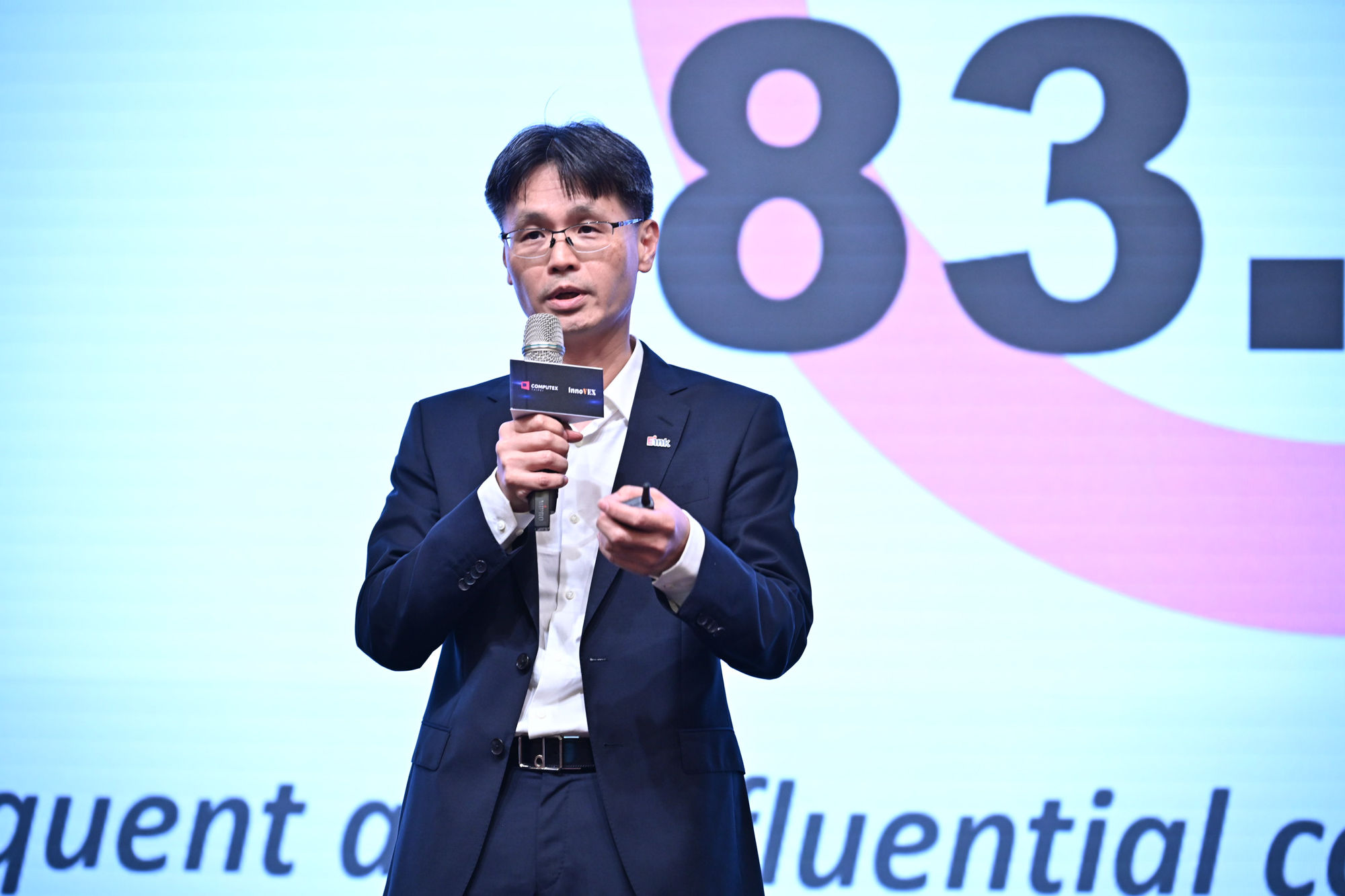
▲JM Hung, Vice President of Business Center
at E Ink
Allen Lien: Alleviating Global Healthcare Shortages and Chronic Disease with
AI
Allen Lien, Chairman and CEO of Acer Medical, presented "AI in Healthcare:
Realities and Challenges." Since 2018, Acer Medical has deeply invested in
healthcare AI, focusing on four pillars: predictive AI, generative AI, the
Artificial Intelligence of Things (AIoT), and AI drug design. This focus has
yielded generative AI medical models, AI Scribes, and big data for preventative
medicine, which have been deployed in over 700 healthcare institutions globally,
marking Acer's successful transition from a hardware giant to a medical
technology leader.
To address global issues like chronic diseases and healthcare labor shortages in
super-aging societies, Acer Medical developed VeriOsteo OP, which identifies
bone density from a single chest X-ray, bypassing traditional high-radiation,
poorly accessible dual-energy X-ray absorptiometry (DEXA) scans. Another tool,
VeriSee AMD, uses fundus cameras to screen for retinal diseases and has been
deployed to remote areas in Belize, the Marshall Islands, Thailand, and
underserved regions in Taiwan. Allen Lien emphasizes that although AI will not
replace doctors, doctors who use AI will replace those who do not use AI.
Acer Medical also developed a cross-disciplinary virtual AI doctor named aiMed
that generates health check reports in seconds while protecting patient privacy.
The technology accomplishes such by integrating knowledge management and
medication guidance management. Unlike Western tech giants that train models on
massive amounts of online data, Acer Medical insists on training its models
using local clinical guidelines and regulatory specifications from the Ministry
of Health and Welfare to create a medical Large Language Model tailored to Asian
demographics.
Furthermore, the company developed aiGait, utilizing Olympic-grade motion
tracking technology to detect minute neurological lesions that are difficult to
spot with the naked eye. When paired with wearable devices, aiGait functions as
a virtual case manager to reduce secondary stroke risks by up to 10%.
Dr. Allen Lien concluded by sharing a touching case of compassionate treatment
where a female patient in her twenties with terminal abdominal cancer
successfully halted the spread of her malignant tumor after receiving
"Immunotherapy of Neoantigen Dendritic Cells (NDC)" designed with AI precision
medicine. Although the patient ultimately passed away due to the excessively
long administrative review period, this attempt provided a strong
proof-of-concept for Taiwan's scientific community.
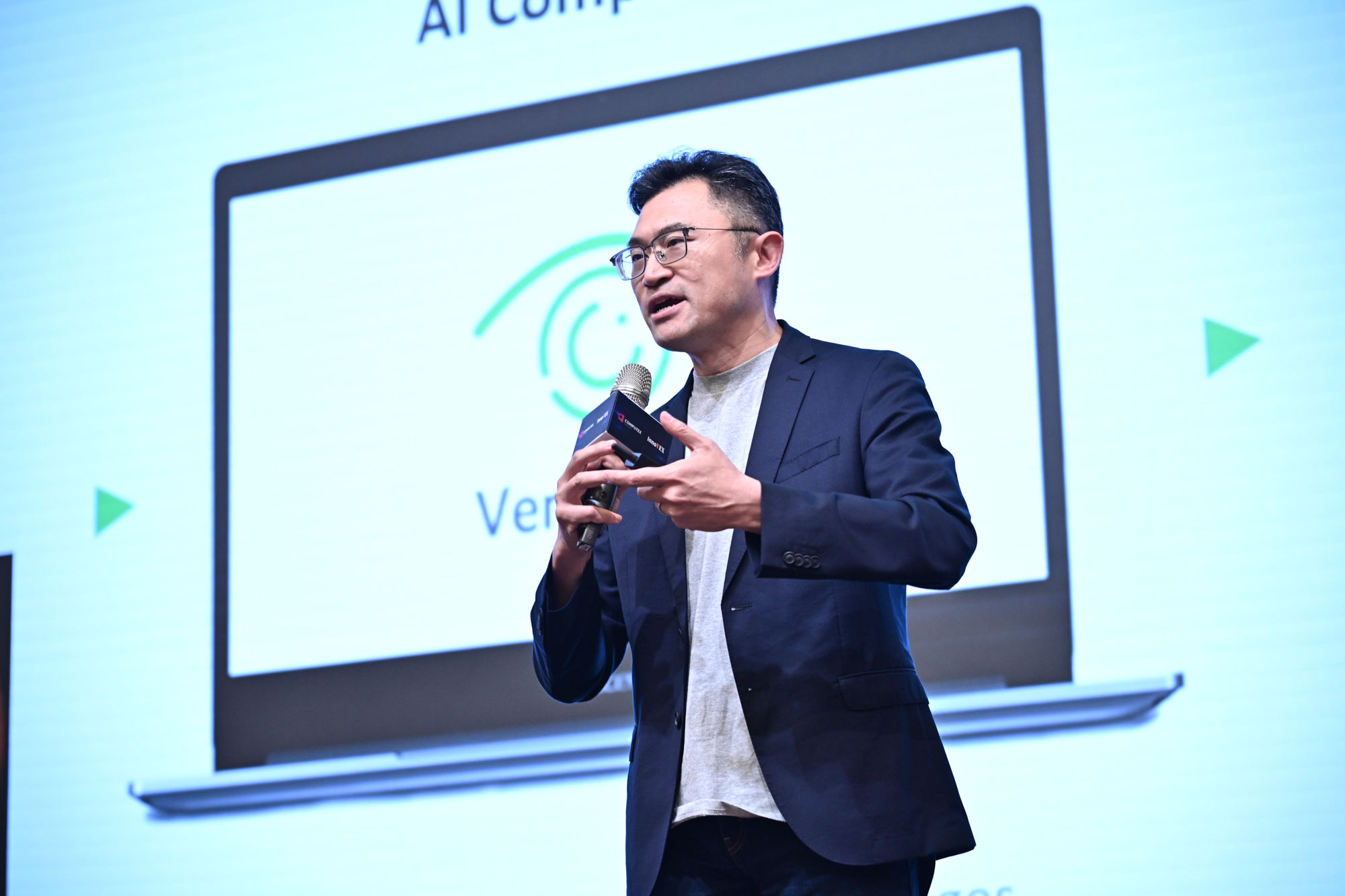
▲Allen Lien, Chairman and CEO of Acer
Medical
COMPUTEX 2026 Pre-Show Forum Speaker Videos to be Released Soon. Watch it on
the Official COMPUTEX YouTube Channel
TCA stated that speaker videos from the COMPUTEX 2026 Pre-Show Forum will be
gradually uploaded to the official COMPUTEX YouTube channel. Everyone is welcome
to watch and subscribe. The Official COMPUTEX YouTube Channel:
https://www.youtube.com/user/COMPUTEXTAIPEIshow。
■About COMPUTEX TAIPEI and InnoVEX
COMPUTEX TAIPEI was
established and named during the term of Chairman Stan Shih of Taipei Computer
Association (TCA), and in 1985, Taiwan External Trade Development Council
(TAITRA) was invited to co-organize the event. InnoVEX is a startup exhibition
jointly launched by the two organizations in 2016.
●About COMPUTEX TAIPEI 2026●
COMPUTEX 2026 Dates: June 2
– June 5, 2026
COMPUTEX 2026 Location: Taipei Nangang Exhibition Center
(TaiNEX 1 & 2), Taipei World Trade Center (Hall 1), and Taipei International
Convention Center (TICC)
COMPUTEX Official Website: https://www.computex.biz/
COMPUTEX Best Choice Award Website:
https://bcaward.computex.biz/
COMPUTEX Facebook:
https://www.facebook.com/ComputexTaipei
COMPUTEX YouTube:
https://www.youtube.com/@COMPUTEXTAIPEIshow
COMPUTEX LinkedIn:
https://www.linkedin.com/company/computex-taipei/
●About InnoVEX 2026●
InnoVEX 2026 Dates: June 2
– June 5, 2026
InnoVEX 2026 Location: Taipei Nangang Exhibition Hall 2
(TaiNEX 2), 4th Floor
InnoVEX Official Website:
https://innovex.computex.biz/
InnoVEX Pitch Contest Website:
https://innovex.computex.biz/show/pitch.aspx
InnoVEX LinkedIn:
https://www.linkedin.com/company/innovextaipei/
InnoVEX Youtube:
https://www.youtube.com/c/innovex_taipei
InnoVEX Facebook:
https://www.facebook.com/computexinnovex
Back